
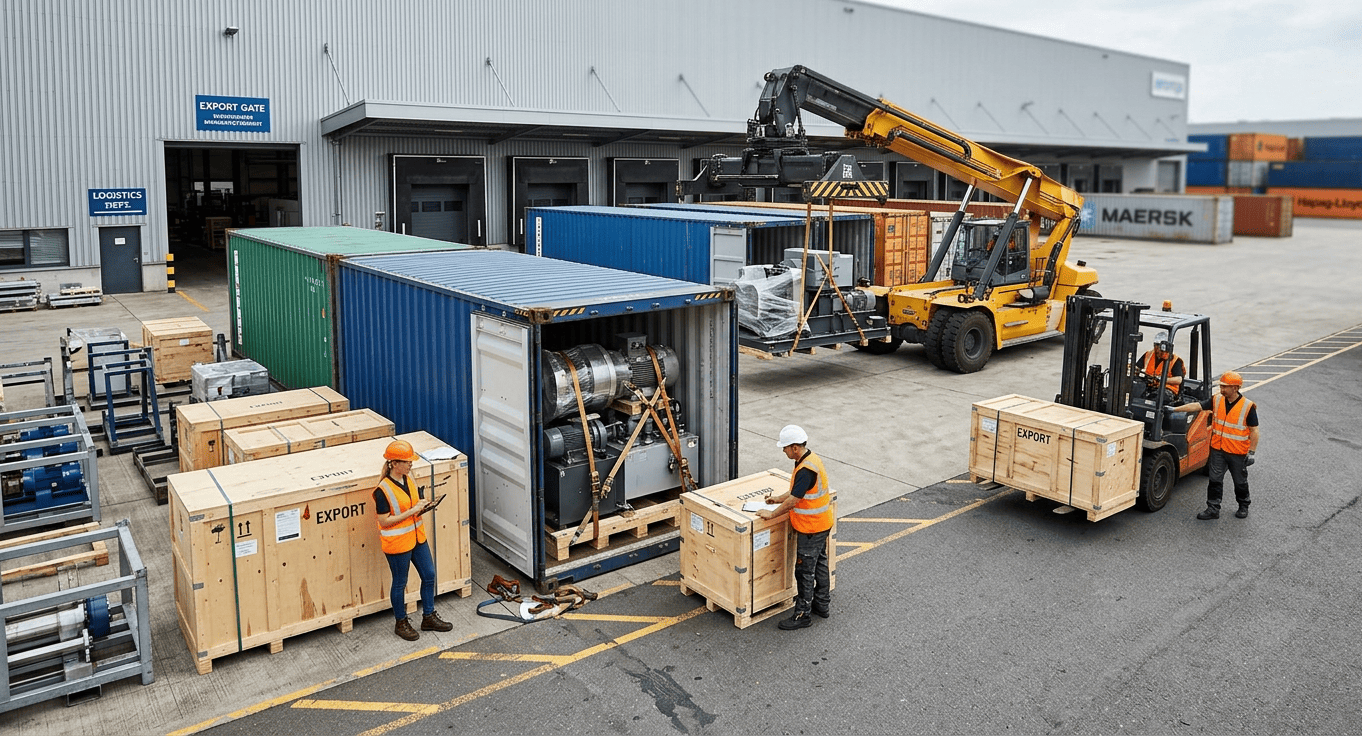
Importing industrial machinery from Europe can significantly enhance production capabilities in Bangladesh. However, navigating logistics, customs, and compliance requirements requires careful planning. This guide walks you through key steps to ensure a smooth import process.
Step 1: Selecting Reliable Suppliers
Choose suppliers with proven track records, certifications, and high-quality equipment. Nexa Trade Consortium sources premium industrial machinery from European manufacturers to ensure reliability and efficiency.
Step 2: Understanding Compliance & Regulations
Ensure machinery meets both European export regulations and Bangladeshi import standards. Verify documentation, safety certificates, and compliance with industry norms to avoid delays at customs.
Step 3: Shipping & Logistics Planning
Plan for safe transportation, whether via sea freight or air cargo. Packaging, insurance, and handling instructions must be precise to prevent damage during transit.
Step 4: Customs Clearance & Duties
Prepare necessary customs documentation, including commercial invoices, packing lists, and certificates of origin. Understanding import duties and taxes helps in budgeting and avoids unexpected costs.
Step 5: Installation & Operational Support
Once the machinery arrives, professional installation and technical guidance are crucial. Nexa Trade Consortium provides operational support and machinery servicing to ensure optimal performance.
Conclusion:
Efficient import of industrial machinery requires strategic planning, regulatory compliance, and expert support. Partnering with a trusted company like Nexa Trade Consortium ensures that businesses in Bangladesh can access high-quality European machinery seamlessly and safely.